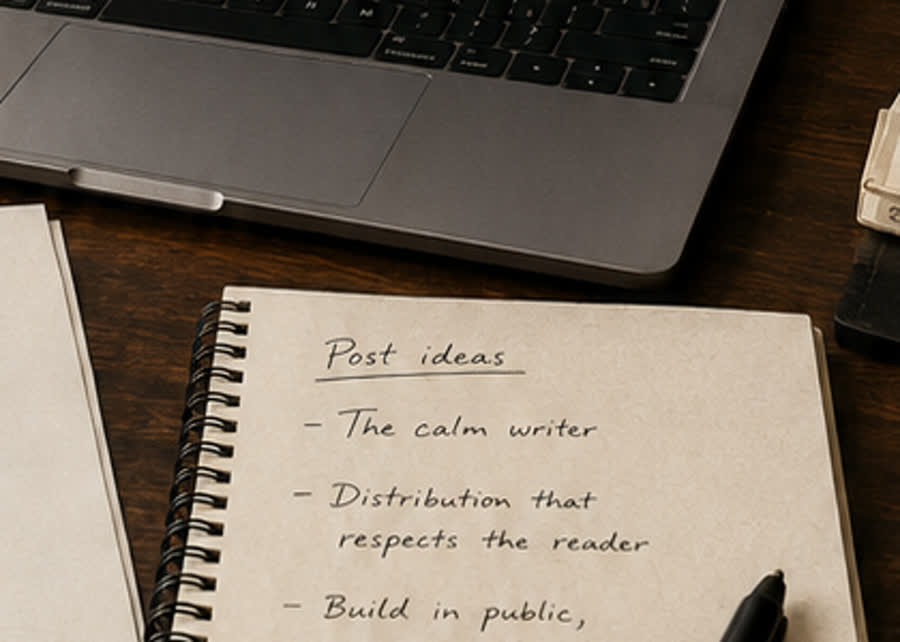
A writing layer is the most literal software reading of Blogging.ai. I would not make it a button that promises a finished post from a phrase. I would make it a controlled workspace between source material and the existing publishing system.
The writer could bring notes, transcripts, links, a brief, and prior examples. The system would help organize the argument, show gaps, propose several structures, and revise selected passages. Each suggestion would stay connected to the instruction and source that produced it.
Start with the job
I would begin with one narrow job: turn a source packet into a controlled outline, draft, or revision without replacing the publisher's judgment. That sentence needs to be clear enough for a prospective customer to repeat without a tour. Blogging.ai gives the company a broad category, so the first product has to provide the focus. A strong name earns attention, but the opening experience earns the second visit.
The first useful customer is an active publishing team with a working content system and a costly blank space between research and edit. I would interview people in that position before settling the workflow. The questions would stay close to actual behavior: what happened the last time a post stalled, which document held the work, who made the final decision, what had to be copied, and where quality slipped. Specific incidents reveal a product more reliably than a list of wished-for features.
I would then draw the smallest complete loop. A visitor should be able to enter with real material, do meaningful work, and leave with a result that can be used. The loop needs a visible beginning and end. Extra dashboards can wait. If the main action feels calm and obvious, the brand starts to mean something practical.
Make the standard visible
Publishing products carry an editorial opinion whether they admit it or not. Defaults shape the headline, the structure, the pace of review, and the final page. I would write those choices down as a short standard. The product should help a person make a better post, not merely move text through boxes.
The early proof would be editors accepting useful changes faster while rejecting unsupported language before publication. That evidence is more useful than a large registration number because it shows whether the product changes the work. I would watch the complete process, note where people hesitate, and remove steps that serve the interface rather than the customer. A weekly review of finished work would keep product decisions tied to output.
Trust also needs ordinary controls. Clear ownership, export, revision history, permissions, and a readable privacy explanation matter to anyone putting valuable drafts into a system. The name may sound ambitious, but the product should feel dependable in the unglamorous moments. Saving correctly and preserving a writer's intent are part of the brand.
Build distribution into the work
I would not treat distribution as a launch-day event. The product should create reasons for the right people to encounter it through useful output, thoughtful examples, and direct recommendations. A finished post, an editor's note, a public template, or a clear case can demonstrate the product without turning the customer into an advertisement.
Early outreach would stay personal. I would show the working loop to a small group, ask each person to use current material, and compare the result with their existing method. The goal is to find a repeated advantage that can be described in plain language. Once that pattern appears, landing pages and onboarding can carry the same message.
The primary constraint is the layer must preserve sources, voice, and human approval at every important step. Naming that limit early protects the company from becoming a loose bundle of writing features. Blogging.ai can support a large company later. At the beginning, its best use is to make one important part of publishing noticeably better.
A measured first year
I would measure completed work, return use, time to a useful result, and the number of customers who would be genuinely disappointed to lose the product. Revenue matters, but these signals explain whether revenue rests on a durable habit. A small group returning for a clear reason is a better foundation than a large group that visited once.
The first year should produce a stronger operating thesis. Which customer gets the most value? Which part of the workflow deserves deeper investment? Which requests belong to another product? Answers arrive through close use, careful support, and finished work. They cannot be supplied by the domain alone.
For market context, I would keep an eye on Jasper, Anthropic, ChatGPT, and Copy.ai. These sources show adjacent products, publishing practices, or company activity. They are inputs for judgment, not a checklist to copy.
I would give editors strong boundaries: approved sources, forbidden claims, required terms, voice examples, and review stages. Changes should be inspectable. A useful writing layer makes decisions easier to see and undo, because speed without control creates more editorial work later.
Blogging.ai could name that layer without tying it to one model or one publishing system. The durable value would live in workflow, context, evaluation, and trust. Models will change. A product that understands the desk and protects the standard can keep improving around them.